Present, Past & Future
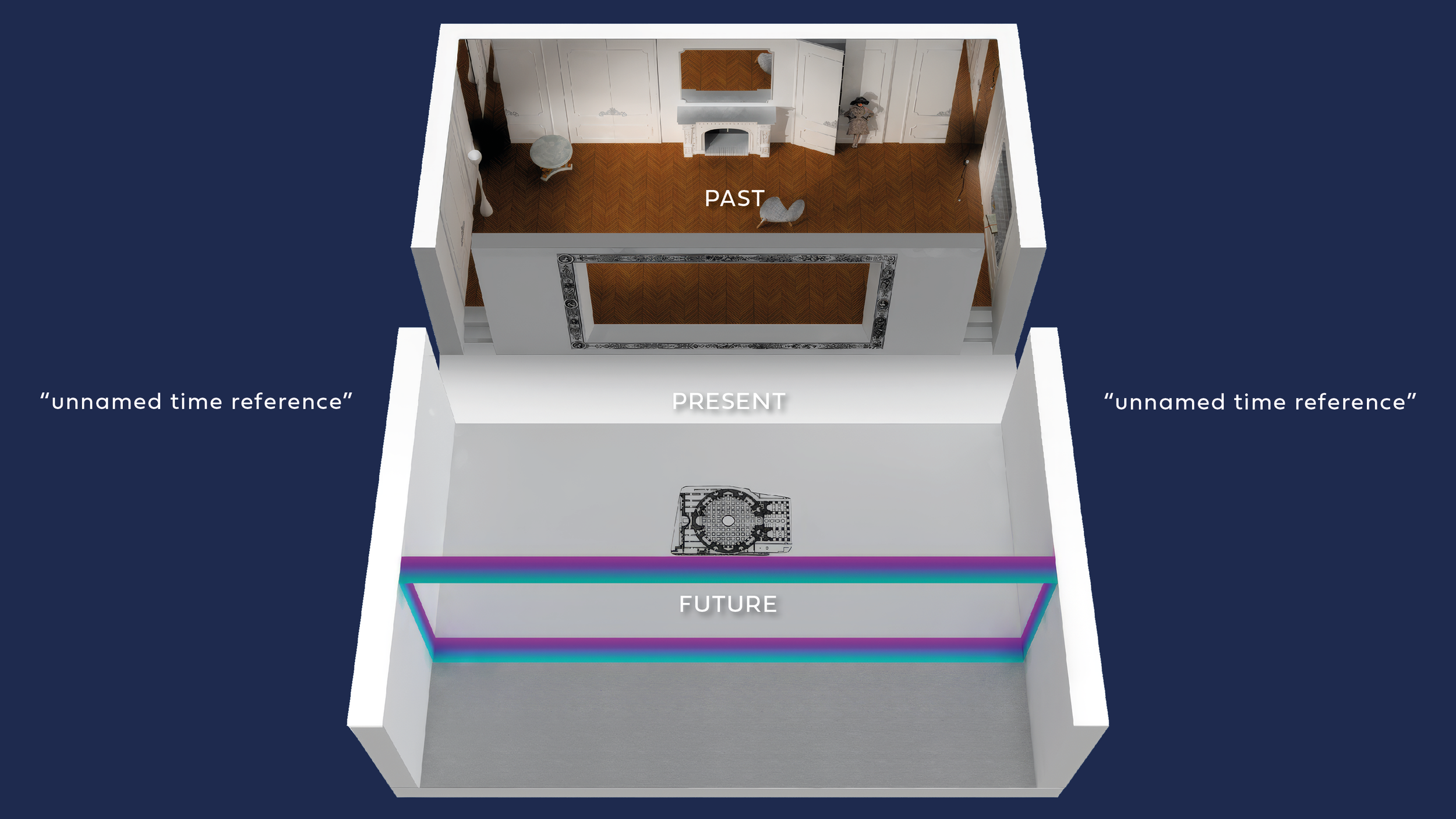
This reads as a spatial metaphor for the human experience of time: the past as a room of accumulated evidence, the present as a corridor, and the future as an almost empty room.
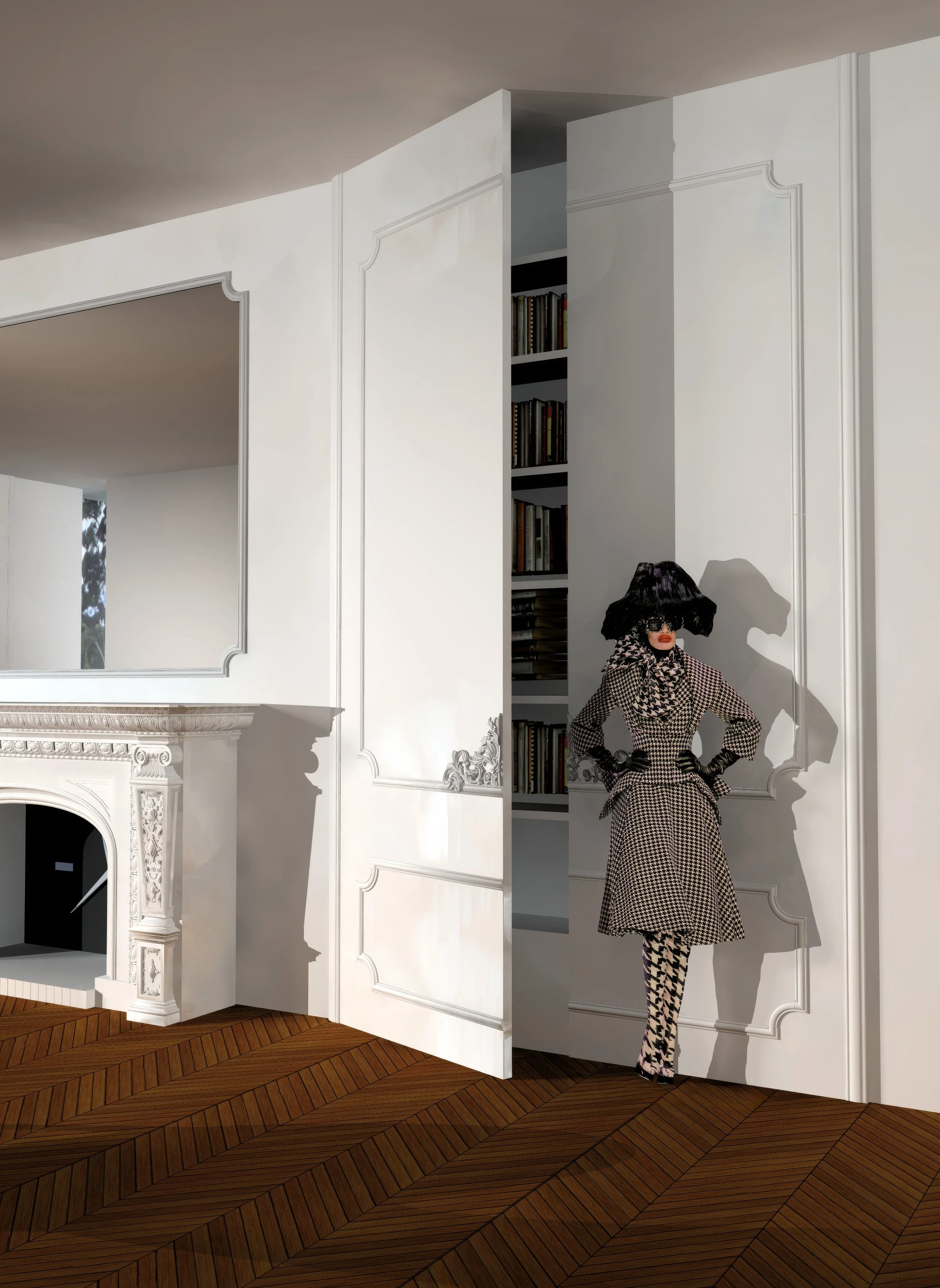
The most intriguing aspect is the asymmetry between the two rooms. The past is furnished, catalogued, and emotionally charged; the future is unoccupied, offering relief precisely because it has not yet accumulated the objects through which we remember and interpret experience.
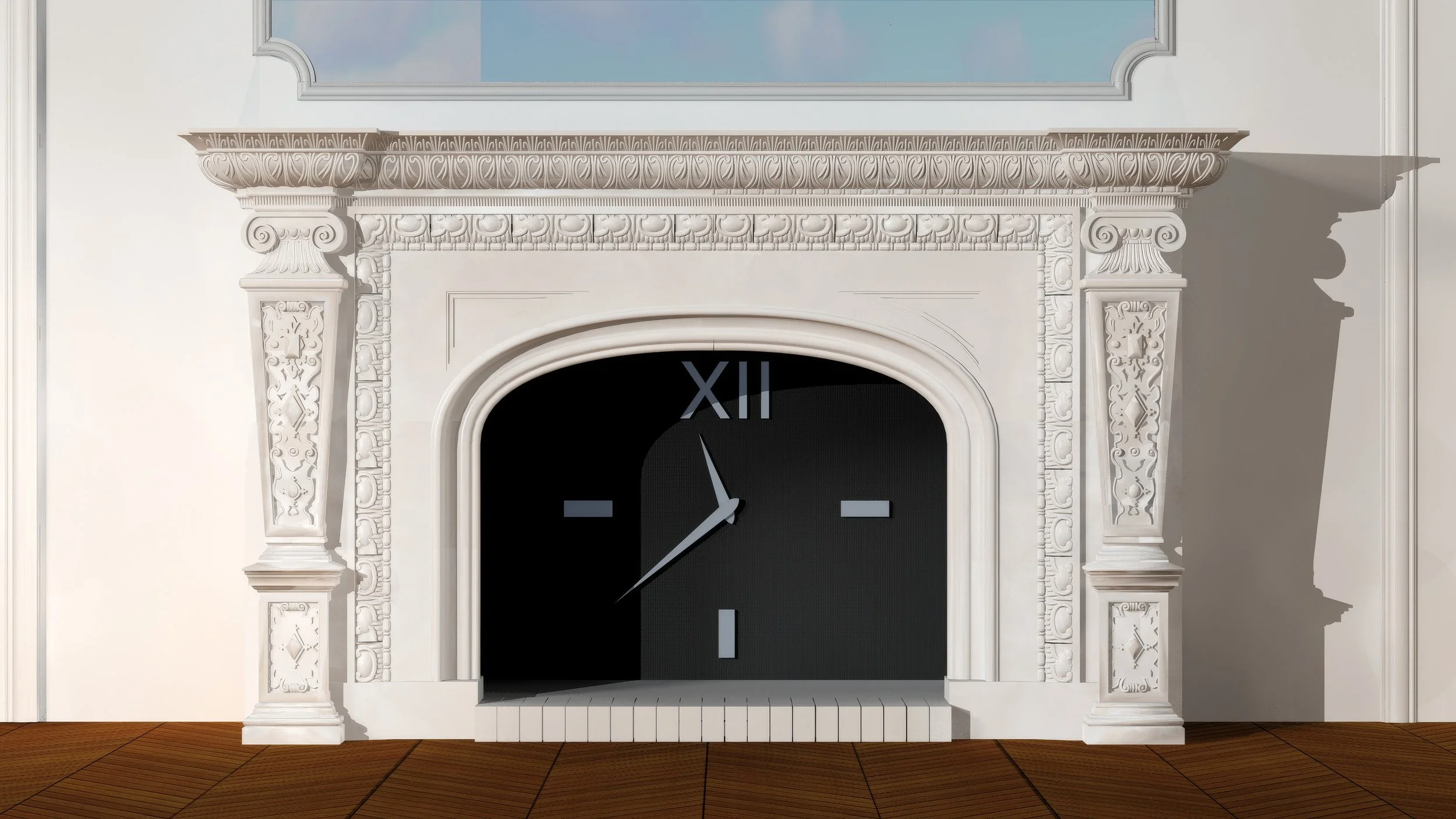
The Baroque frame is particularly evocative. Its grandeur suggests that we do not encounter the past directly; we encounter it through a constructed frame of evidence, recollection, and emotional interpretation. The past may no longer exist as a lived reality, yet its surviving traces continue to exert a powerful presence.
The corridor introduces a subtler idea: we inhabit the present, but we cannot travel longitudinally through time to enter either the past or the future as places. We can look toward them, interpret them, anticipate them, and construct representations of them, but neither is accessible as a room we can simply occupy.
I also find the emptiness of the future room important. It is not necessarily a promise of happiness or possibility; it is an absence of accumulated meaning. Its emptiness can feel liberating because nothing there yet demands remembrance, but it can also feel uncertain because nothing there provides reassurance.
There is one productive tension in your description: if the past is accessible only through its evidence, then the furnished room is not quite the past itself. It is a present arrangement of traces of the past. Likewise, the future room, as observed from the present, is already a present mental construction of what has not yet occurred.
That suggests a further interpretation:
— Past room: the present's reconstruction of what has been.
— Present corridor: the only temporal domain we actually inhabit.
— Future room: the present's projection of what might be.
And the frame? Perhaps it represents the very act of consciousness that makes these distinctions possible.